A critical topic for the green transition and more widely entrepreneurship is the availability of risk finance. Venture capital represents one of the most illiquid asset classes and hence a high risk -high reward profile. We have compared government, hybrid government-private and private VC funds. Hybrid funds outperform all others.
Published in a very influential journal and cited in the recent launch of a 500mil hybrid fund.
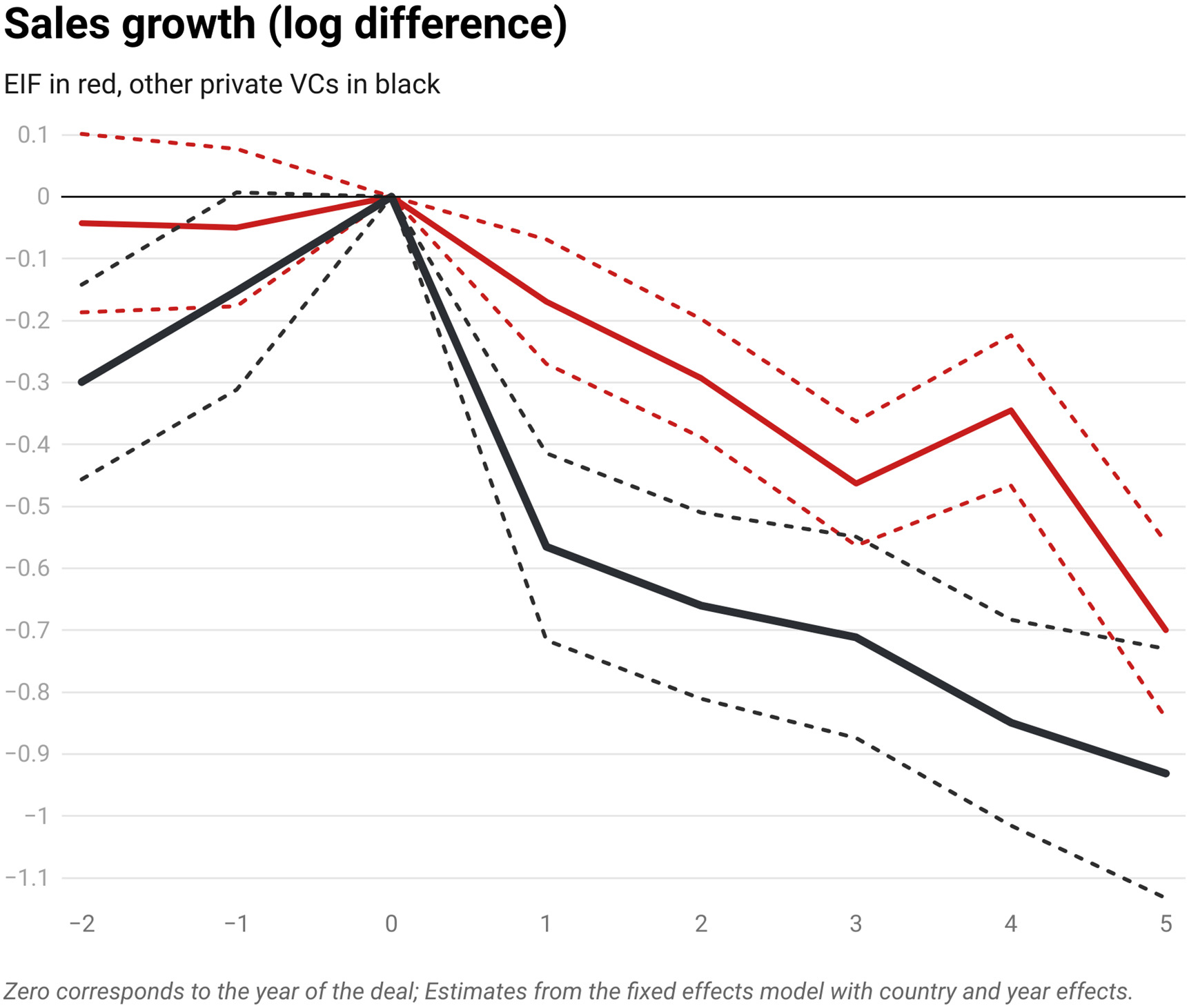
In this research, we analyzed how different types of venture capital investments—private, public, and indirect public—affected the performance of portfolio companies. We used data of >20,000 VC deals in Europe between 2000 and 2018 from different institutional settings (public/indirect/private) that included almost 5000 investors. We found that public VC investors performed consistently worse than purely private ones, while indirect public investments (such as the “Juncker Plan” or InvestEU investments) performed consistently better. We associate these findings with the access of public funds to specific cliques of investors. In contrast, indirect funds invested in funds with comparatively better network profiles. This means that indirect public investors were capable of picking the best-performing funds but did not add any value above this. We confirmed the main conclusions using instrumental variable specifications.
 Policy Complexity
Leave a comment